Electric, gas, water, and telecommunications utilities managing infrastructure across large service territories. We build the systems that coordinate field crews, track assets, and keep compliance filed - so the operation runs whether the supervisor is on-site or not.
Large service territories, aging infrastructure, regulatory complexity, and dispersed field crews create coordination and compliance pressure that generic software wasn't designed for.
Dozens of technicians working across hundreds of square miles, each with their own work orders, tools, and schedules - coordinated by dispatchers who are managing everything on phone calls and spreadsheets that don't tell you where anything actually is.
NERC, EPA, FERC, and state PUC requirements produce a continuous stream of documentation obligations. When it's tracked manually - across emails, binders, and disconnected systems - something always slips, and the penalties are real.
Transformers, lines, meters, and substation equipment that fails on its own schedule - not yours. Without systematic asset health tracking, maintenance is reactive, outages are surprises, and capital planning is guesswork.
Service requests, maintenance work orders, and emergency dispatch managed in one system - automatically routed to the right crew with the right equipment, in real time.
Infrastructure assets tracked across your territory - with condition data, maintenance history, and predictive failure alerts before outages happen.
NERC, EPA, FERC, and state regulatory documentation generated and filed automatically - so audits don't require a week of pulling records together.
Technician scheduling, certification tracking, and territory routing automated across service areas - dispatchers see the full picture, not just what fits on one screen.
Inspection results, meter readings, and service records captured in the field and synced automatically - no manual data entry back at the office.
Service territory performance, outage patterns, crew productivity, and infrastructure health in one dashboard - available from the office or the field.
Network overview map, outage management, system reliability, asset health, crew status, and your AI operations engine - all connected, all real time.
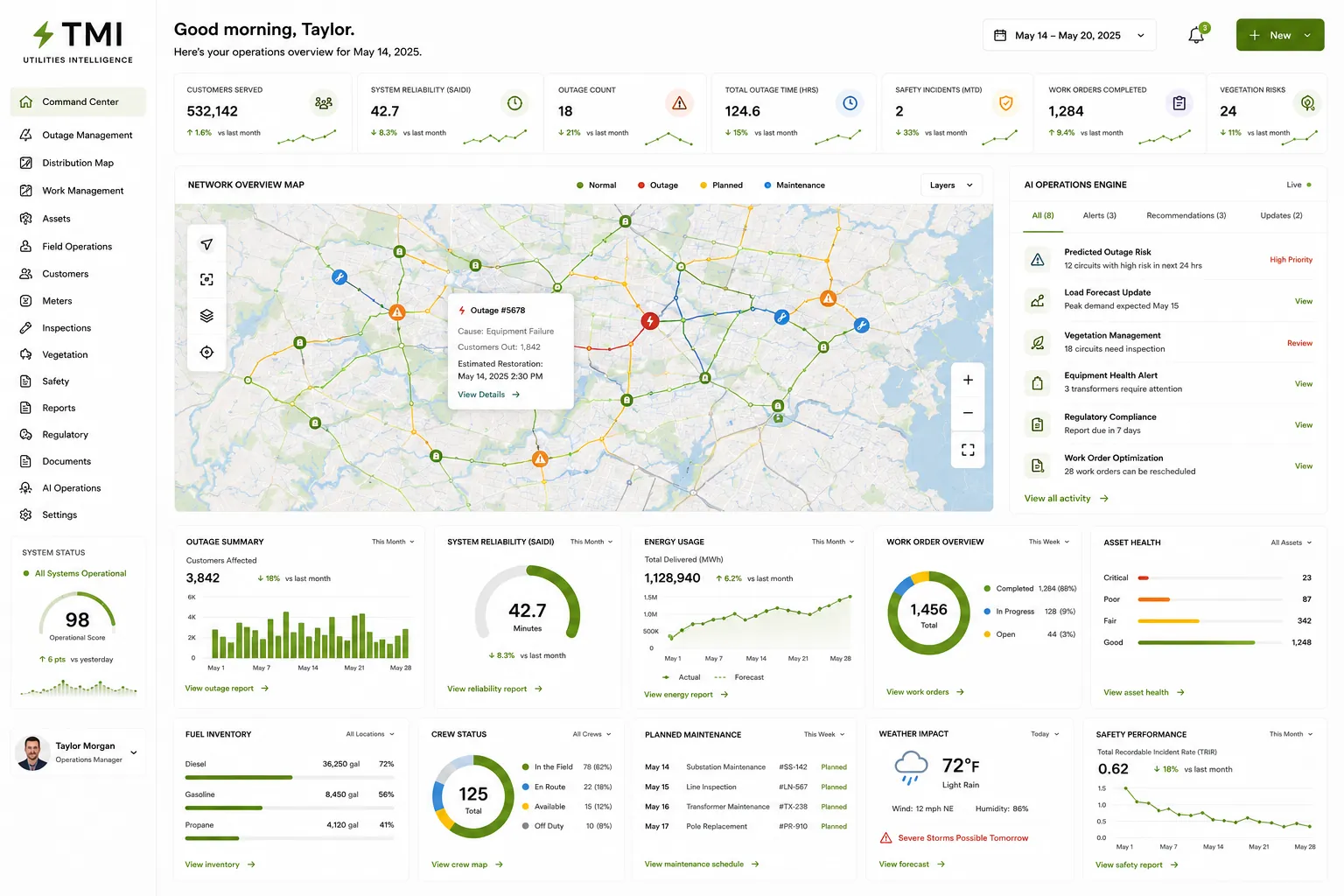
Every system designed around the operational reality of utility work - large territories, aging assets, non-stop compliance, and field crews that need to move without waiting for the office.
Service requests and maintenance orders routed automatically to the right crew - no dispatcher bottleneck.
Field technician routing, territory coverage, and emergency response coordination in real time.
Full inventory, condition, and maintenance history for infrastructure assets across your service territory.
Failure prediction for transformers, lines, and equipment - maintenance scheduled before outages, not after.
NERC, EPA, FERC, and state documentation generated automatically - audit-ready without the scramble.
Inspection results, meter reads, and service records captured in the field and synced - no re-entry.
Technician schedules, qualifications, and territory assignments managed without spreadsheet juggling.
Territory performance, outage patterns, and crew productivity in real-time dashboards.
Infrastructure health tracked across the territory - alerts fired before issues become outages.
One call. We walk every process, bottleneck, and gap in your workflow. Nothing gets assumed. Nothing gets skipped.
Custom intelligent infrastructure built specifically for how you operate. Done for you. 14 days max. No templates. No generic software.
Your team gets trained. The system runs. We stay on for support. You never deal with a generic software vendor again.
Field work orders created, assigned, and tracked from dispatch to close automatically. No paper. No calls back to the office for updates.
Routes field crews based on location, skill, and current job status. Emergency work gets the nearest qualified crew without a dispatcher working the phones.
Equipment age, service history, and inspection records maintained automatically. Maintenance needs surface before failures happen.
Regulatory inspections, test results, and corrective actions logged at the time they happen. Compliance records are always current.
Service requests get logged, prioritized, and dispatched automatically. High-priority issues reach field crews without queue delays.
Contractor work orders, delivery schedules, and performance tracking in one place. You know what is outstanding without chasing.
We build a digital work order system that creates, assigns, and tracks field jobs from the moment they open to the moment they close. Status is always visible. No paper. No phone updates.
Yes. Inspection results, test records, and corrective action documentation get captured automatically and stored against the relevant asset or permit. Audit preparation becomes a report pull, not a file search.
Emergency requests trigger automatic dispatch to the nearest qualified crew. Response time tracking starts immediately. SLA records are always current.
Every asset gets a service history and inspection record. Maintenance intervals trigger alerts automatically. You know what needs service before it fails.
14 days from the discovery call to deployment, including training for field and dispatch staff.
Beyond the systems, TMI installs entire offices, staffed by digital workers that own a whole function end to end and run inside the same operating layer. Start with the one that fixes your most expensive problem.
Tell us about your territory. We'll build around your infrastructure, your crews, and the regulatory environment you operate in.
Every engagement starts with the Complete Audit. We map exactly how your business runs, then delete the software you don't use, connect what's left, and build the systems and AI that run it. You own what we build.
We audit your stack and cut the software nobody uses. Less to manage and smaller bills, from day one.
We wire what is left into one operational layer, so nothing lives in a silo and the whole operation is visible.
We build the systems and AI that run the work you used to run by hand. Deployed, your team trained, handed over.
One door in. Every engagement starts with the Complete Audit: a detailed map of your operation, your Intelligence Score, and the 30-day plan to fix it.
Take the intelligent company audit →Related Industries
 TMI
TMI