Make sense
of the basics.
Learn what AI, automation, and business intelligence do—and how they differ.
MISSION FORWARD EDUCATION / OPEN TMI RESOURCES
Begin with education through Mission Forward. Use these open TMI guides to explore AI, business systems, and the knowledge inside your company.
Start with Mission ForwardRead, explore, and learn. No email required.
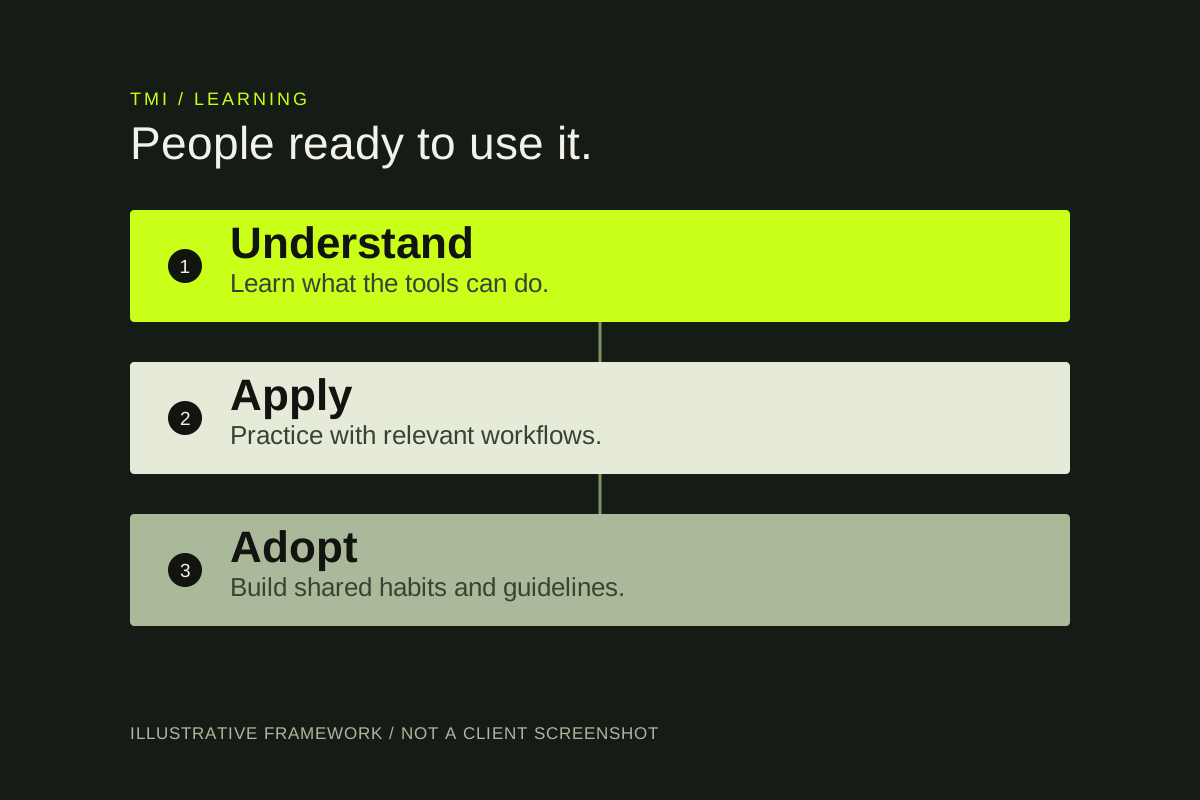
Learn what AI, automation, and business intelligence do—and how they differ.
Think through a workflow before buying a tool or starting a pilot.
Build a shared understanding of the work, the information, and the decisions involved.
These work together, but they solve different problems. Start with the job you want done.
Generative AI produces text, images, or other content from patterns and context. In a business, it might prepare a first draft, summarize an approved document, or suggest categories for a person to review.
Example: draft a response to a customer’s request using an approved service description. A person checks the facts, price, and commitments before sending.
Know the limit: a fluent answer can still be wrong. An AI model is not your source of truth, and a draft is not an approved decision.
Read the AI readiness guideAutomation moves work through defined steps when a condition is met. It does not have to involve AI. A rule can create a task, copy an approved field, or send an internal reminder.
Example: when an accepted quote enters your system, create a job record and notify the person who schedules it.
Know the limit: the rule needs a clear owner and an exception path. A broken process repeated automatically is still a broken process.
Compare automation and human supportData is the information the business records. Business intelligence organizes that information so people can understand activity, ask questions, and make decisions.
Example: a job-status view combines approved records so operations and the office can see the same progress without reconciling separate spreadsheets.
Know the limit: a dashboard is only as reliable as its definitions, source records, and update process. Agree which source wins when two systems disagree.
Understand a data foundationOperating knowledge includes the judgment people use to handle real work: what an unusual request means, when to ask for approval, and what to do when the normal path fails.
Example: walk through a difficult handoff with the experienced employee, write down the decision points, and test the instructions with a colleague.
Know the limit: a written process needs an owner and a way to stay current. Documenting the steps does not remove the need for judgment or training.
Explore people and knowledgeRead a guide, look up a term, or work through a question with your team.
What changes when a company can reach, trust, and use what it already knows.
Read the guide GUIDE / BUSINESS CLARITYLearn the difference between an assessment you can act on and a report that stays on a shelf.
Read the guide GUIDE / AI READINESSThink through the task, source information, permissions, and handoff before a pilot begins.
Read the guide EXPLAINER / DATAUnderstand what connecting, cleaning, and organizing business information involves.
Explore the foundations EXPLAINER / DECISIONSExplore the role of reporting, visibility, and shared definitions in everyday decisions.
Understand intelligence EXPLAINER / PEOPLEExplore how processes, training, and knowledge capture support the people doing the work.
Explore people + knowledge REFERENCE / PLAIN LANGUAGEA reference for unfamiliar terms, with links to the subjects behind them.
Open the glossary REFERENCE / YOUR OPTIONSRead the tradeoffs between different approaches to systems, automation, and change.
Compare the options PRACTICAL / SELF-GUIDEDExplore practical tools and questions that help turn a broad concern into a clearer starting point.
Explore the tools MISSION FORWARD / EDUCATIONEducation, leadership, and opportunity through Mission Forward.
See what the session covers COMMUNITY / ACADIANAExplore the education, leadership events, and community TMI is building in Acadiana.
Explore the community PERSPECTIVE / THE FOUNDERSLonger-form letters from TMI’s founders on companies, people, and what comes next.
Read the lettersTry a broader term, or clear the filters to explore everything.
Use these questions with the person who does the work. This is a planning aid, not a readiness score or a substitute for an assessment.
No answers are collected or stored.
Name one workflow and the person it should help.
Follow a real example. Include the exceptions and handoffs.
Identify the source, the owner, and what happens when records conflict.
Agree permissions and keep confidential material in approved systems.
Name the reviewer and the point where a person must approve action.
Use a baseline from the real workflow. Test exceptions before expanding.
LEARNING DOESN’T HAVE TO HAPPEN ALONE.
Start with Mission Forward for current education programs and opportunities to learn together. When you want to apply that thinking inside your business, explore working with TMI.
Explore Mission Forward Or send us a question